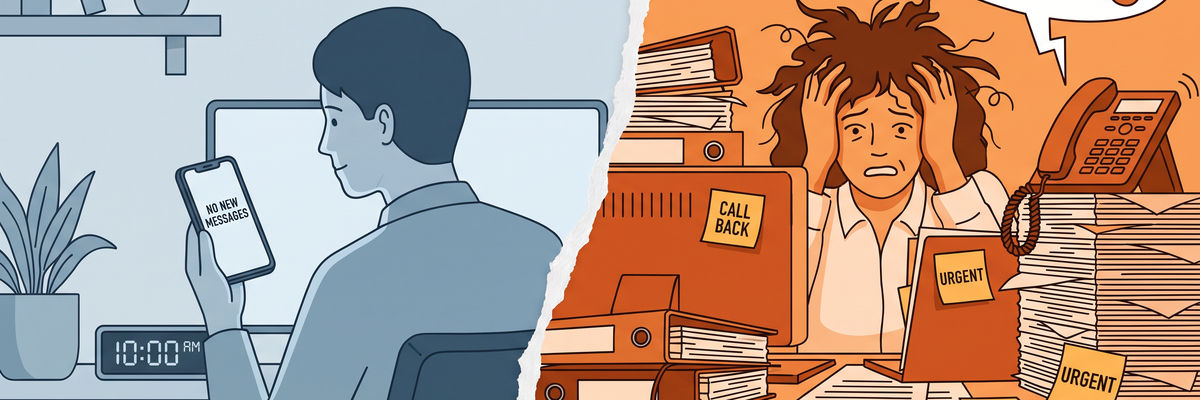
You had a great interview. Then, silence.
It's one of the most frustrating experiences in a job search, and it's tempting to assume the worst about yourself when it happens. But understanding what's actually going on inside the company can help you stop blaming yourself and start following up more effectively.
Today, FindYourJobNow.com is explaining, without making excuses, the operational reasons hiring teams sometimes go quiet, so you can calibrate your expectations and respond with strategy instead of anxiety.
Survey research on employer and candidate ghosting has found that going silent during the hiring process is remarkably common, and it happens for a wide variety of internal reasons that have little to do with the candidate's qualifications.[1] Research from iHire's State of Online Recruiting series has consistently documented this as an ongoing, structural problem within hiring processes across industries, not an isolated issue with any one company or any one candidate.[2]
So what's actually happening on the other side of that silence? A few common scenarios. Sometimes a hiring freeze gets implemented after interviews are already underway, often due to budget decisions made at a level far above the hiring manager you spoke with. The hiring manager themselves might not even have clear updated guidance to share with you yet, and understandably chooses silence over sharing incomplete information.
Sometimes an internal candidate emerges partway through the external hiring process, and the company quietly shifts direction without formally closing out communication with external candidates, either due to oversight or simple discomfort with delivering that message. Sometimes the hiring manager or recruiter is genuinely overwhelmed, managing multiple open roles simultaneously with limited administrative support, and candidate communication falls to the bottom of an overloaded priority list, not because they don't care, but because something else always feels more urgent in the moment.
Sometimes review and approval overload within the company slows the process down dramatically. A candidate slate might sit waiting for sign-off from someone several levels removed from the actual hiring team, and that person's calendar, not your qualifications, becomes the bottleneck. None of these scenarios reflect anything about you. They reflect the internal, often messy realities of how hiring decisions actually get made inside real organizations.
Knowing this changes how you should approach follow-up. Instead of interpreting silence as rejection and giving up, or interpreting it as a personal slight and feeling anxious, you can approach follow-up as a simple, low-pressure check-in that gives the company an easy opening to share an update whenever they're ready to. This calibrated understanding also means you shouldn't take the silence personally or let it damage your confidence heading into your next interview.
Practically, this also means you should never let a single opportunity, no matter how promising it felt, become the only thing you're focused on. Since delays and silence are often driven by internal company factors completely outside your control and often outside the hiring manager's control as well, the only reliable strategy is to keep multiple opportunities moving forward at once, so no single company's internal chaos can derail your entire job search.
Ready to reframe ghosting with more accurate expectations? Here's your action plan: Remind yourself that silence usually reflects internal company chaos, not your qualifications. Send a brief, low-pressure follow-up if you haven't heard back within a reasonable timeframe. Keep other opportunities actively moving so no single company's silence controls your momentum or your mood.
Head over to our homepage (or click the home button above) and use our advanced job search toolbar. Type in the kind of job you're looking for and where you want to work… then click "view jobs."
Research on employer ghosting shows it's a common, structural issue driven by hiring freezes, internal candidates, overwhelmed hiring teams, and review bottlenecks, not a reflection of your qualifications. Understanding what's actually happening inside the company helps you follow up calmly instead of anxiously, and reminds you to keep your pipeline full rather than pinning everything on one company's silence.
[1] Indeed — Survey Research on Employer and Candidate Ghosting