How many jobs should you be applying to?
It's one of the most common questions job seekers ask. And the answer might surprise you.
Most people assume more is better. Send out as many applications as possible and something will stick. But the data tells a very different story. And understanding it could completely change how you approach your job search.
Today, FindYourJobNow is breaking down what the research actually says about application volume versus quality… and helping you find the right strategy for your situation.
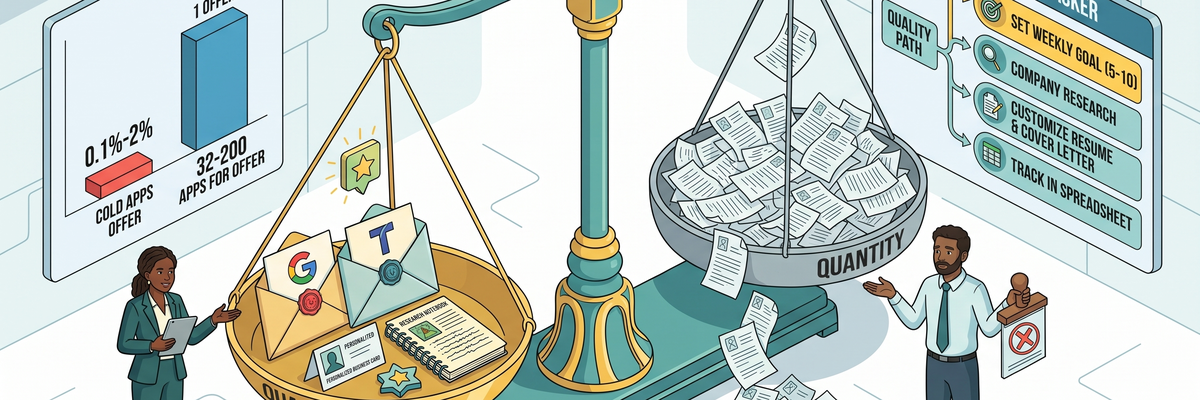
Here's the reality of cold applications in 2026: Only 0.1% to 2% of cold applications result in a job offer.[1] Let that sink in. If you're sending out generic applications to jobs you found on a job board with no personal connection and no tailoring, you might need to send 50 to 1,000 applications to get a single offer. And research shows that many applicants now submit anywhere from 32 to over 200 job applications before receiving an offer, depending on industry and experience level.[2] That's a lot of applications. And for most of them, the return is minimal.
So does that mean you should apply to fewer jobs? Not exactly. It means you should apply smarter. There's a meaningful difference between sending 200 generic applications and sending 50 highly targeted, carefully tailored ones. The 50 targeted applications will almost certainly outperform the 200 generic ones, and they'll take less of a toll on your energy and motivation.
Here's how to think about the quality versus quantity question: Start by identifying your target companies and roles. Don't just apply to anything that vaguely matches your background. Be intentional about where you want to work and what you want to do. Research each company before you apply. Tailor your resume and cover letter to each specific role. This takes more time per application, but the conversion rate is dramatically higher.
At the same time, don't be so selective that you're only applying to one or two jobs at a time. You need enough volume to keep your pipeline healthy and to protect yourself from the emotional rollercoaster of having all your hopes riding on a single application. A good target for most job seekers is five to ten high-quality, tailored applications per week rather than fifty generic ones.
Combine your applications with active networking. The data consistently shows that referrals and personal connections dramatically outperform cold applications. While you're applying, reach out to your network, request informational interviews, and look for warm introductions to companies you're targeting. A single referral can be worth more than a hundred cold applications.
Track everything. Use a spreadsheet to monitor where you've applied, when you applied, who you've spoken to, and when to follow up. This keeps you organized, prevents you from applying to the same company twice, and helps you identify patterns in what's working and what isn't.
And be patient. As we've discussed, the average job search takes about five months. Consistent, strategic effort over time beats frantic, high-volume applying every single time.
Ready to apply smarter? Here's your action plan: Set a weekly goal of five to ten high-quality, tailored applications. Research each company before you apply. Customize your resume and cover letter for every role. Combine applications with active networking. Track everything in a spreadsheet.
Head over to our homepage (or click the home button above) and use our advanced job search toolbar. Type in the kind of job you're looking for and where you want to work… then click "view jobs."
Only 0.1% to 2% of cold applications result in a job offer, and many applicants submit 32 to over 200 applications before receiving one. More applications aren't the answer. Better applications are. Focus on quality over quantity, combine applying with active networking, and track your progress consistently. A smarter approach will get you further faster than simply flooding the market with your resume.
[1] HiringThing — 2025 Job Application Statistics: Cold Application Success Rates
[2] HiringThing — 2025 Job Application Statistics: Application Volume Before Offer
[3] Huntr — 2025 Annual Job Search Trends Report
[4] High5Test — 20+ Job Search Statistics in the U.S. 2024-2025