If you have a disability and you're worried about how to navigate the application or interview process, you have more rights and more options than you might realize.
Today, FindYourJobNow.com is walking through what a reasonable accommodation actually is, when you can request one, and how the process typically works.
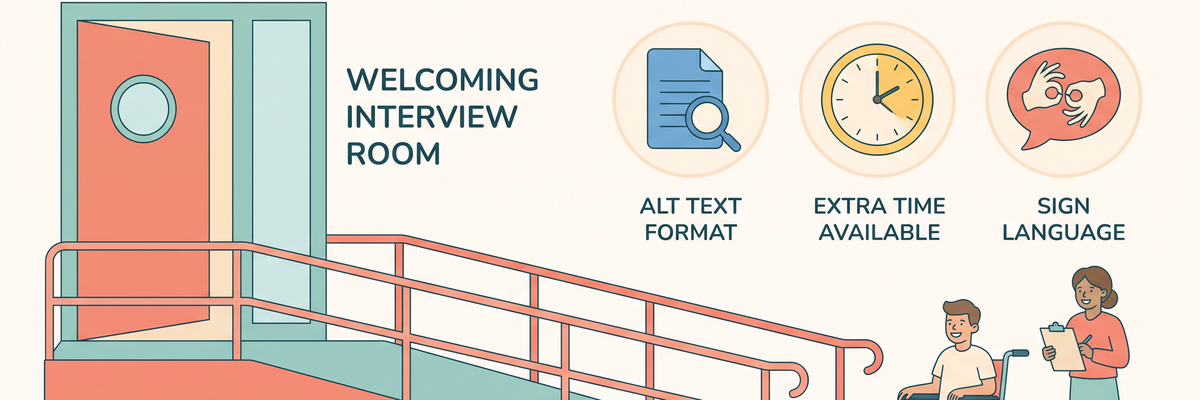
A reasonable accommodation is a change or adjustment to the hiring process, or eventually to a job itself, that allows a qualified candidate with a disability to have an equal opportunity to participate.[1] This might mean an adjustment to how an interview is conducted, an alternative format for a required test or assessment, or physical accessibility accommodations for an in-person interview location.
You can request an accommodation at any point during the application, interview, or testing process, whenever you determine you need one. There's no requirement to disclose a disability upfront if you don't need any accommodation, and disclosing a disability is a separate matter from requesting an accommodation. You can request an accommodation without necessarily going into detail about the specific nature of your disability, focusing instead on what adjustment would help you participate fully and fairly in the process.
Examples of accommodations during the hiring process can include things like providing interview questions in advance or in an alternative format, allowing extra time for a written assessment, ensuring a physically accessible interview location, or providing a sign language interpreter for an interview. The specific accommodation depends entirely on your individual situation and what would actually help you participate on equal footing.
When you make a request, an employer may ask for some information to understand what accommodation would be appropriate, but this should be limited to what's reasonably necessary to identify and provide the accommodation itself, not an invitation for a broader medical inquiry.[1] This is an important distinction. Requesting an accommodation is not the same as being required to disclose your full medical history or diagnosis.
It's also worth understanding that under the Americans with Disabilities Act, employers may need to provide certain kinds of assistance to applicants with disabilities in specific circumstances, and there are corresponding restrictions on the kinds of disability-related questions employers can ask before a job offer is made.[2] This framework is designed specifically to balance an employer's legitimate hiring needs with a candidate's right to a fair and equal opportunity to be considered for a role.
If you're unsure how to approach requesting an accommodation, keep your request simple and focused on the specific adjustment you need. You don't need to over-explain or justify your request extensively. A clear, direct request, made whenever you realize you need one, is generally the most effective approach.
Ready to understand your rights around workplace accommodations during hiring? Here's your action plan: Know that you can request an accommodation at any stage of the process. Understand that requesting an accommodation doesn't require disclosing your full medical history. Keep your request clear and focused on the specific adjustment you need. Research EEOC guidance directly if you want more detailed information for your specific situation.
Head over to our homepage (or click the home button above) and use our advanced job search toolbar. Type in the kind of job you're looking for and where you want to work… then click "view jobs."
Reasonable accommodations exist to give qualified candidates with disabilities an equal opportunity throughout the hiring process. You can request one at any stage without disclosing your full medical history, and employers are limited in what they can ask in response. Understanding this process can help you navigate interviews and assessments with more confidence and less uncertainty.
[1] EEOC — Pre-Employment Inquiries and Disability
[2] EEOC — ADA: Your Employment Rights as an Individual With a Disability